
From Soft Power to Sacred Encounter: Rethinking Cultural Diplomacy Through Shared Meals and Human Storytelling
- Anna Saladino

- Aug 7
- 19 min read
Ann Saladino
IRLS492 Senior Seminar in International Relations
Dr. Sayeed Ahmed
July 23, 2026
From Soft Power to Sacred Encounter: Rethinking Cultural Diplomacy Through Shared Meals and Human Storytelling
Introduction
International relations scholarship has traditionally focused on states, institutions, military power, economic interdependence, and formal diplomacy as the primary mechanisms through which peace and stability are maintained. Realists emphasize power and security competition, liberals focus on cooperation through institutions and interdependence, and constructivists examine the influence of ideas, identities, and norms on state behavior. While each framework contributes valuable insights, contemporary conflicts increasingly reveal one key limitation shared across these approaches:
They often underestimate the role of relational trust in sustaining peace.
Many of today’s conflicts are fueled not only by disputes over territory, resources, or political authority but also by identity-based polarization, historical grievances, social fragmentation, and competing narratives. Formal diplomatic agreements may reduce violence, yet they often fail to address the underlying perceptions and relationships that sustain mistrust between communities. In an era characterized by increasing polarization and social disconnection, understanding how trust is built across cultural, religious, ethnic, and ideological boundaries has become an increasingly important area of inquiry.
This paper argues that Cultural Stewardship, understood as an applied synthesis of soft power, intergroup contact theory, Track II diplomacy, and constructivist insights, serves as a practical mechanism for reducing identity-based polarization and fostering sustainable peace through shared meals, narrative exchange, and sustained human encounter. While Cultural Stewardship is not presented as a replacement for traditional international relations theories, it offers a framework through which their insights can operate at the human level. By examining the intersection of soft power, constructivism, peacebuilding, and people-to-people diplomacy, this paper contends that sustainable peace depends not only upon agreements among governments but also upon trust among the people those agreements are intended to serve.
The central research question guiding this analysis follows: How can Cultural Stewardship, expressed through shared meals, narrative exchange, and people-to-people diplomacy, reduce identity-based polarization and contribute to sustainable peacebuilding in international relations?

The Limits of Traditional International Relations Approaches
International relations theories have provided valuable frameworks for understanding the causes of war, cooperation, and political behavior among states. Realism views the international system as fundamentally anarchic with states acting primarily to maximize security and power. From a realist perspective, conflict emerges naturally from competition among self-interested actors operating without a central authority (Mearsheimer 2001).
Liberalism offers a more optimistic view, emphasizing the capacity of institutions, economic interdependence, and democratic governance to mitigate conflict and encourage cooperation (Keohane and Nye 1977). Constructivism, meanwhile, challenges purely material explanations of international politics by arguing that state interests and identities are socially constructed through norms, ideas, and shared understandings (Wendt 1999).
Each perspective contributes valuable insights. Yet each also reveals limitations when examining contemporary identity-based conflicts. Formal institutions may facilitate agreements, but they cannot automatically eliminate prejudice. Military deterrence may prevent violence, but it cannot create trust. Economic cooperation may increase interdependence, but it does not necessarily transform perceptions of the so-called other.
The persistence of ethnic conflict, religious polarization, and ideological division suggests that political agreements alone are insufficient. The challenge is not simply one of governance. It is also one of human perception.
This limitation becomes particularly visible in protracted conflicts when communities continue to view one another through lenses of fear, trauma, and historical grievance long after political settlements have been reached. In such environments, sustainable peace requires more than institutional arrangements—it requires the transformation of relationships.
Constructivism, Identity, and Human Perception
Among the major theoretical traditions, constructivism provides perhaps the strongest foundation for understanding the importance of human encounter. Constructivists argue that international politics is shaped not only by material capabilities but also by identities, beliefs, and social norms (Wendt 1999).
Alexander Wendt’s famous assertion that “anarchy is what states make of it” highlights the degree to which perceptions and social interactions influence political behavior (Wendt 1992). States do not merely respond to objective realities. They respond to the meanings they assign to those realities.
This insight extends beyond states themselves. Individuals and communities similarly construct identities through social interaction, historical memory, and cultural narratives. Groups develop conceptions of who belongs, who does not, who can be trusted, and who should be feared.
These narratives often become self-reinforcing. Communities separated by conflict may rarely encounter one another directly, allowing stereotypes and assumptions to flourish unchecked. Over time, identities become hardened, and the perceived distance between groups grows.
Constructivism therefore provides an important starting point for understanding how interpersonal engagement might contribute to peacebuilding. If identities are socially constructed, they may also be reshaped through meaningful interaction.
Yet constructivism offers limited guidance regarding how such transformation occurs in practice. This is where theories of intergroup contact and peacebuilding become particularly valuable.
“Trust Is Slow”
Relational Trust as Strategic Infrastructure
Inspired by Iraqi-American cultural steward Midhat Zwayen
One of the most overlooked dimensions of international relations is trust. Discussions of power, institutions, and diplomacy often assume that trust will emerge naturally once political arrangements are established. In reality, trust frequently develops far more slowly than formal agreements.
John Paul Lederach argues that sustainable peace requires the creation of relationships capable of addressing both immediate conflicts and long-term social divisions (Lederach 1997). Rather than viewing peace as merely the absence of violence, Lederach emphasizes reconciliation, relationship-building, and the restoration of social trust.
This perspective aligns closely with observations from numerous peacebuilding initiatives around the world. Political agreements may establish frameworks for cooperation, but they rarely address the emotional and relational dimensions of conflict. Trust develops through repeated interactions, demonstrated reliability, and shared experiences.
Field observations from humanitarian operations and intercultural engagement throughout the Middle East consistently illustrate this principle. In environments characterized by political instability, religious diversity, and historical grievances, cooperation often depends less upon formal authority and more upon personal relationships. Individuals frequently choose to collaborate not because institutions require it but because trust has been established through sustained interaction.
Such observations do not replace formal theory. Rather, they provide practical illustrations of Lederach’s argument that relationships constitute a critical infrastructure for peacebuilding.
Trust, in this sense, functions as a strategic asset. It reduces uncertainty, facilitates cooperation, and creates opportunities for dialogue that would otherwise be impossible. Without trust, even well-designed institutions struggle to achieve their intended outcomes. With trust, seemingly insurmountable divisions can begin to soften.
The challenge for international relations scholars is therefore not merely to understand how states negotiate peace agreements but how people cultivate the trust necessary for those agreements to endure.
“Get Uncomfortable”
Intergroup Contact and the Transformation of Perception
Inspired by Jordanian-Palestinian cultural steward Mahmoud Alnsha
If trust is the infrastructure of peacebuilding, meaningful contact is often the mechanism through which that infrastructure is constructed. One of the most influential frameworks for understanding this process is Gordon Allport’s Intergroup Contact Theory. Writing in The Nature of Prejudice, Allport argued that under appropriate conditions, direct contact between members of different groups can reduce prejudice and improve intergroup relations (Allport 1954).
At the time, Allport’s theory challenged the assumption that prejudice could be reduced primarily through information, education, or moral persuasion. Instead, he suggested that sustained interaction between groups could alter perceptions by replacing abstract stereotypes with concrete human experiences. Subsequent scholarship has strongly supported this proposition.
In one of the most comprehensive examinations of contact theory, Pettigrew and Tropp analyzed more than five hundred studies involving hundreds of thousands of participants and found that intergroup contact consistently reduced prejudice across a wide range of contexts and identities (Pettigrew and Tropp 2006). Importantly, positive outcomes were not limited to race or ethnicity. Similar effects were observed across religious, national, political, and cultural boundaries.
The significance of these findings extends far beyond domestic social relations. Many contemporary conflicts persist because groups rarely encounter one another as individuals. Instead, they encounter narratives about one another. The “other” becomes an abstraction, a stereotype, or a threat rather than a human being.
This dynamic is increasingly visible in modern societies where algorithmic media environments allow individuals to curate information ecosystems that reinforce existing beliefs. People may consume endless content about other groups while rarely interacting with members of those groups directly. The result is a paradox: unprecedented connectivity accompanied by increasing social distance.
Intergroup contact theory suggests that meaningful encounters can disrupt this cycle. However, such encounters are rarely comfortable. They often require individuals to confront assumptions, challenge inherited narratives, and navigate unfamiliar social environments. Genuine understanding seldom emerges from the safety of one’s existing worldview.
This reality is reflected in the phrase “get uncomfortable.” While often associated with personal growth, the phrase also captures a critical principle of peacebuilding. Transformation frequently occurs at the edge of familiarity. Individuals must become willing to enter spaces where certainty gives way to curiosity and where assumptions can be tested against lived reality.
Field observations throughout the Middle East provide numerous illustrations of this process. Encounters with individuals who challenge existing stereotypes often create cognitive dissonance. A person taught to fear Muslims may encounter extraordinary hospitality from Muslim families. Someone raised to view a particular group as hostile may discover shared values, humor, aspirations, and concerns. Such moments rarely resolve complex political disputes, but they can weaken the psychological barriers that sustain those disputes.
In this sense, discomfort is not a barrier to peacebuilding but often a prerequisite for it.
“Stay Curious”
Curiosity as a Peacebuilding Mechanism
Inspired by Dr. Jared Sorber, founder of Cultural Curiosity
While intergroup contact creates opportunities for transformation, not all contact produces positive outcomes. Individuals can encounter cultural differences and emerge more entrenched in their existing beliefs than before. The difference often lies in the posture individuals bring to the encounter.
Curiosity occupies a unique place within intercultural communication because it encourages exploration rather than judgment. It allows individuals to approach unfamiliar beliefs, practices, and identities as opportunities for learning rather than threats to be managed. In many ways, curiosity functions as a bridge between contact and understanding.
Constructivist scholars emphasize that identities and perceptions are shaped through social interaction (Wendt 1999). Curiosity creates the conditions under which those interactions become transformative. Without curiosity, contact may simply reinforce preexisting assumptions. With curiosity, contact becomes an opportunity to reconsider them.
This distinction is particularly important in environments characterized by polarization. Polarized societies often reward certainty and discourage complexity. Individuals are incentivized to defend identities rather than examine them. Curiosity interrupts this pattern by replacing the question, “How do I prove I am right?” with the question, “What can I learn?”
Research on dialogue initiatives consistently demonstrates the importance of this shift. Successful people-to-people programs frequently emphasize storytelling rather than debate. Participants are encouraged to share experiences rather than defend positions.
The goal is not necessarily agreement but understanding.
Such approaches align closely with constructivist assumptions regarding the social construction of meaning. Stories provide access to how individuals interpret their experiences, identities, and relationships. They reveal motivations, fears, aspirations, and memories that often remain invisible within formal political discourse.
Curiosity also plays an important role in reducing identity-based polarization. When individuals become genuinely interested in understanding others, they begin to move beyond simplistic categorizations. Communities that once appeared monolithic reveal internal diversity. Opponents become multidimensional human beings rather than caricatures.
The practical implications are significant. Peacebuilding efforts frequently focus on changing attitudes or behaviors. Curiosity offers a different starting point. Rather than attempting to persuade individuals to adopt new beliefs, it encourages them to ask better questions.
The cumulative effect of such questions can be profound. Curiosity creates space for empathy. Empathy creates space for trust. Trust creates space for cooperation. What begins as a conversation can eventually contribute to broader patterns of social cohesion.
From this perspective, curiosity is not merely a personality trait but a strategic resource. In societies increasingly divided by ideological, cultural, and religious differences, the willingness to remain curious may be one of the most underappreciated tools available for reducing polarization and fostering sustainable peace.
Track II Diplomacy and the Human Dimension of Peace
Traditional diplomacy is often conducted through official channels involving governments, diplomats, and formal institutions. While these mechanisms remain essential to international stability, scholars increasingly recognize that many conflicts cannot be resolved through official negotiations alone. Deep-seated mistrust, historical grievances, and competing identities often persist long after treaties are signed and political agreements are reached.
Track II diplomacy emerged as a response to this reality. Unlike formal state-to-state negotiations, Track II diplomacy involves unofficial interactions among academics, community leaders, religious figures, civil society actors, and ordinary citizens. These initiatives create spaces where difficult conversations can occur outside the constraints of official political processes (Jones 2015).
Davies and Kaufman argue that Track II diplomacy provides opportunities to address psychological and relational dimensions of conflict that are often inaccessible through formal diplomacy (Davies and Kaufman 2002). Participants are encouraged to explore fears, perceptions, narratives, and identities that influence political behavior but are rarely discussed in official negotiations.
This distinction is critical. Governments may negotiate ceasefires, borders, or power-sharing agreements, but they cannot directly negotiate trust between neighbors. They cannot legislate reconciliation. They cannot compel genuine understanding.
Track II diplomacy seeks to address this gap by focusing on relationships rather than transactions.
The experiences of Israeli peace activist Maoz Inon and Palestinian peace builder Aziz Abu Sarah illustrate this principle. Both men experienced profound personal losses resulting from the Israeli-Palestinian conflict. Yet rather than embracing hatred, they chose to engage in dialogue and relationship-building. Their partnership demonstrates how personal encounter can challenge narratives that portray entire communities as enemies.
Such efforts do not eliminate political disagreements. Nor do they ignore legitimate grievances. Instead, they create opportunities for participants to see one another as human beings before seeing one another as representatives of opposing groups.
This emphasis on human encounter provides an important foundation for understanding Cultural Stewardship as an applied form of Track II diplomacy.
Soft Power Beyond Institutions
Joseph Nye’s concept of soft power expanded the understanding of influence in international relations by emphasizing attraction rather than coercion. Soft power operates through culture, values, institutions, and legitimacy rather than military force or economic pressure (Nye 2004).
According to Nye, states are more likely to achieve desired outcomes when others are attracted to their values and culture. Soft power therefore functions through persuasion and voluntary cooperation rather than compulsion.
While highly influential, soft power is often discussed at the level of states and institutions. Countries project cultural influence through education, media, cultural exchanges, diplomacy, and public engagement. These efforts seek to shape perceptions and foster goodwill among foreign populations.
Yet soft power also operates at a profoundly personal level:
· A shared meal can influence perceptions.
· A conversation can alter assumptions.
· A friendship can challenge stereotypes.
· A story can reshape identity.
In this sense, soft power does not belong exclusively to governments. It can also emerge through human relationships. Individuals become ambassadors of their communities and cultures, intentionally or unintentionally influencing how others perceive the groups they represent.
This perspective broadens the traditional understanding of cultural diplomacy. Rather than viewing culture solely as an instrument of statecraft, it becomes a medium through which trust, understanding, and cooperation are cultivated among people.
The implications are significant. If constructivists are correct that identities are socially constructed and if soft power operates through attraction and legitimacy, then interpersonal relationships may serve as powerful vehicles for transforming perceptions and reducing polarization.
The challenge becomes identifying practical mechanisms through which these transformations occur.
One of the most overlooked mechanisms may be the simplest: people sharing a table.
“Respect the Flavors”
Shared Meals, Cultural Identity, and Human Connection
Inspired by Former US Army Ranger, Jon Jaxson, founder of Comfort Farms
Throughout history, food has served as far more than sustenance. Meals create opportunities for storytelling, hospitality, relationship-building, and cultural transmission. Around tables, people share memories, celebrate milestones, negotiate disagreements, teach traditions, and establish trust.
Anthropologists have long observed that food functions as a cultural language. Meals communicate belonging, identity, values, and social expectations. Hospitality often serves as a visible expression of respect and dignity.
In many cultures, sharing food signifies acceptance into a social space that extends beyond formal interaction. It creates opportunities for vulnerability, laughter, disagreement, curiosity, and mutual understanding.
This dynamic appears repeatedly throughout conflict transformation and intercultural engagement efforts. Participants may arrive carrying stereotypes, fears, or misconceptions. Yet change happens when people share food, exchange stories, and spend time together in relational rather than adversarial settings.
The phrase “respect the flavors,” shared by veteran, farmer, and cultural steward Jon Jaxson captures this principle beautifully. The phrase suggests that healthy communities are not strengthened by making everyone the same. Instead, they are enriched by preserving the distinct contributions each person and culture brings to the collective experience.
This insight stands in contrast to contemporary pressures toward cultural homogenization. Increasing globalization has undoubtedly created opportunities for connection and exchange. Yet many societies are simultaneously experiencing declining community participation, weakening social bonds, and increasing loneliness.
Recent research suggests that approximately half of American adults report experiencing loneliness while social trust and civic participation have declined significantly over recent decades (U.S. Department of Health and Human Services 2023; Putnam 2000). These trends raise important questions about belonging, identity, and social cohesion.
What happens when people lose connection to family stories, cultural traditions, local communities, and inherited forms of belonging?
This question informs the emerging concept of cultural dilution. Cultural dilution does not refer to multiculturalism or cultural exchange. Rather, it describes the weakening of meaningful cultural inheritance, community bonds, and shared traditions that help individuals understand who they are and where they belong.
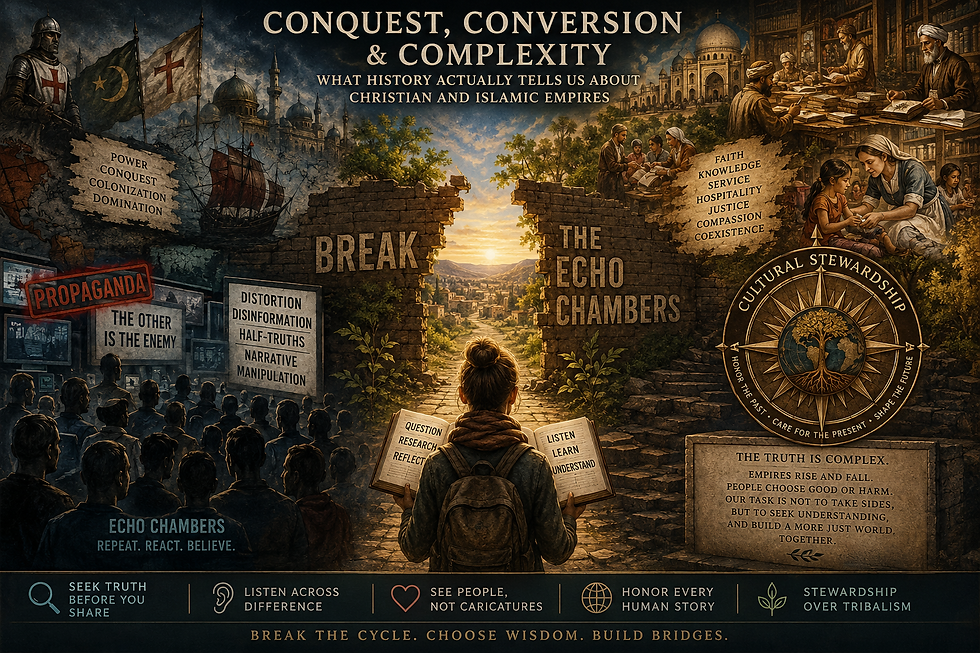
When healthy forms of belonging weaken, individuals often seek substitutes. Sometimes those substitutes are positive. Other times, they take the form of ideological tribes, online echo chambers, extremist movements, or highly polarized communities that offer certainty, identity, and purpose.
The importance of shared meals and storytelling becomes clearer within this context. Such practices provide opportunities to rebuild belonging without requiring uniformity. They allow individuals to maintain distinct identities while participating in a larger community.
The goal is not assimilation but connection.
From this perspective, shared meals become more than social activities. They become small acts of cultural diplomacy. Each meal creates an opportunity for participants to move beyond abstraction and encounter one another as human beings:
· Trust is built.
· Stories are exchanged.
· Assumptions are challenged.
· Relationships are formed.
· And in many cases, the perception of “them” begins to dissolve.
These dynamics suggest that cultural engagement may represent an underappreciated component of peacebuilding. The question is no longer whether human encounter matters. The question is how intentionally such encounters can be cultivated as part of broader efforts to strengthen social cohesion and reduce identity-based polarization.
“Together, Our Differences Make Us Extraordinary”
Cultural Stewardship as Applied Peacebuilding
The preceding sections have examined several complementary strands of scholarship. Constructivism emphasizes the importance of identities, norms, and social meaning. Intergroup Contact Theory demonstrates the capacity of meaningful interaction to reduce prejudice and reshape perceptions. Track II diplomacy highlights the importance of unofficial dialogue and relationship-building in conflict transformation. Soft power reveals how attraction, legitimacy, and culture influence behavior. Peacebuilding scholars, such as John Paul Lederach, emphasize the central role of relationships in sustainable reconciliation.
Individually, each framework contributes important insights. Collectively, they suggest something more profound: Peace is not merely a political process but also a relational process.
This observation provides the foundation for what this paper describes as Cultural Stewardship.
Cultural Stewardship may be understood as the intentional practice of building relational trust across cultural, religious, ethnic, and ideological boundaries through curiosity, hospitality, narrative exchange, and sustained human encounter. It does not replace existing international relations theories. Rather, it functions as an applied synthesis of their most human-centered insights.
Constructivism explains why perceptions matter.
Intergroup Contact Theory explains how perceptions change.
Track II diplomacy creates spaces where those changes can occur.
Soft power helps explain why attraction and legitimacy influence behavior.
Peacebuilding scholarship demonstrates why relationships matter for long-term stability.
Cultural Stewardship integrates these insights into a practical framework focused on encounter.
This distinction is important because many contemporary approaches to conflict resolution remain heavily focused on institutions, policies, and political actors. While these mechanisms remain necessary, they often overlook the role of ordinary people in shaping social realities. Political agreements may establish conditions for peace, but communities ultimately determine whether peace takes root.
This argument is consistent with constructivist assumptions regarding the social construction of identities and norms. If conflict is sustained through narratives, perceptions, and social relationships, then peace must also be cultivated through narratives, perceptions, and relationships.
The practical implications are significant. Peacebuilding can no longer be viewed solely as conducted by diplomats, governments, or international organizations. It must also involve teachers, religious leaders, artists, business owners, community organizers, families, and ordinary citizens:
· Every shared meal becomes an opportunity for diplomacy.
· Every meaningful conversation becomes an opportunity for trust-building.
· Every story exchanged becomes an opportunity to challenge assumptions.
Viewed through this lens, peacebuilding becomes less about grand gestures and more about accumulated encounters.
Field Observations and Illustrative Examples
While the theoretical foundations discussed above provide important scholarly support, practical observations from intercultural engagement offer illustrative examples of how these dynamics operate in real-world settings.
Throughout humanitarian operations, intercultural travel, and people-to-people engagement across the Middle East, recurring patterns emerge that align closely with the literature. Individuals who initially viewed one another through stereotypes frequently experienced shifts in perception following direct interaction. These shifts rarely occurred through debate or persuasion. More often, they emerged through hospitality, storytelling, shared experiences, and sustained relationship-building.
In Iraqi Kurdistan, for example, hospitality often functioned as an informal mechanism of trust-building. Guests were welcomed into homes, offered food, introduced to family members, and included in conversations that extended beyond politics or security concerns. Such encounters frequently revealed shared values centered on family, dignity, faith, service, and community.
Similar patterns emerged throughout Egypt, Jordan, the Gulf region, and other parts of the Middle East. Many interactions challenged assumptions commonly held in Western discourse. Individuals initially perceived through the lens of religion, nationality, or politics became multidimensional human beings once personal relationships developed.
These observations are consistent with Allport’s contact hypothesis and Pettigrew and Tropp’s findings regarding the transformative potential of meaningful interaction. They also support Lederach’s contention that sustainable peace emerges through relationships rather than agreements alone.
Perhaps most importantly, these encounters demonstrated that trust rarely develops through abstraction but instead develops through proximity:
· People who share meals together begin to humanize one another.
· People who tell stories to one another begin to understand one another.
· People who remain curious about one another begin to challenge inherited assumptions.
Such transformations may appear modest. Yet when repeated across communities and generations, their cumulative effects can become significant.
From Human Encounter to Social Cohesion
The significance of Cultural Stewardship extends beyond individual relationships. At scale, repeated experiences of positive intercultural engagement can contribute to broader patterns of social cohesion.
Social cohesion refers to the degree of trust, cooperation, and connectedness within a society. Communities characterized by high levels of trust are generally more resilient, more capable of collective action, and less vulnerable to polarization. Conversely, societies marked by social fragmentation often experience increased distrust, identity-based conflict, and susceptibility to extremist narratives.
This connection becomes particularly relevant in an era marked by rising loneliness and declining social capital. As traditional sources of belonging weaken, many individuals increasingly seek identity through political affiliation, online communities, ideological movements, or other forms of social grouping. While some of these communities provide healthy forms of connection, others reinforce polarization by defining identity primarily through opposition to perceived outgroups.
Cultural Stewardship offers an alternative approach:
· Rather than encouraging uniformity, it encourages meaningful engagement across difference.
· Rather than asking individuals to abandon their identities, it encourages them to understand their own identities more deeply while remaining open to others.
· Rather than reducing complexity, it embraces it.
This approach reflects the insight captured by the saying, “Together, our differences make us extraordinary.” The phrase is not merely aspirational. It reflects an understanding that diversity becomes a strength when accompanied by trust, curiosity, and mutual respect.
Without trust, differences can become a source of fear. But with trust, differences become a source of learning.
Without relationships, diversity can become fragmentation. But with relationships, diversity becomes resilience.
In this way, Cultural Stewardship contributes not only to interpersonal understanding but also to the broader social conditions necessary for sustainable peace.
Conclusion
Peace Must Be Cultivated
The partnership between Palestinian peace builder Aziz Abu Sarah and Israeli peace activist Maoz Inon provides a compelling illustration of the central argument advanced throughout this paper. Both men experienced devastating personal losses connected to one of the world’s most enduring conflicts. Conventional logic might suggest that such experiences would reinforce division, deepen mistrust, and perpetuate cycles of hostility. Instead, both chose a different path. Through dialogue, relationship-building, and sustained engagement, they transformed personal tragedy into a commitment to reconciliation.
Their example highlights an important reality often overlooked in international relations scholarship: Conflict is experienced by people before it is experienced by states.
International relations theories have contributed enormously to understanding war, cooperation, institutions, power, and political behavior. Realism explains competition and security dilemmas. Liberalism illuminates the role of institutions and interdependence. Constructivism demonstrates how identities, norms, and perceptions shape political outcomes. Yet none of these frameworks fully capture the significance of relational trust in sustaining peace.
This paper has argued that Cultural Stewardship functions as an applied synthesis of several complementary theoretical traditions. Drawing upon constructivism, intergroup contact theory, Track II diplomacy, soft power, and peacebuilding scholarship, Cultural Stewardship offers a practical framework for reducing identity-based polarization through shared meals, narrative exchange, curiosity, hospitality, and sustained human encounter.
The evidence suggests that human beings rarely change their perceptions through information alone. They change through relationships.
People may debate ideas for years without altering their views. Yet a single conversation, a shared meal, or a meaningful friendship can challenge assumptions that once seemed unquestionable. Contact theory demonstrates the transformative potential of encounter. Track II diplomacy demonstrates the value of informal dialogue. Constructivism explains why identities are malleable rather than fixed. Soft power reveals the influence of attraction and legitimacy. Peacebuilding scholarship reminds us that reconciliation ultimately depends on relationships.
Taken together, these insights point toward a common conclusion: sustainable peace requires more than political agreements. It requires relational trust.
This argument does not suggest that shared meals replace diplomacy, that storytelling eliminates conflict, or that interpersonal engagement alone can resolve deeply rooted political disputes. Formal institutions, security arrangements, economic cooperation, and political leadership remain essential components of international stability. However, these mechanisms are often insufficient when communities remain trapped within cycles of fear, mistrust, and dehumanization.
Peace agreements may end wars, but they do not automatically end prejudice.
Policies may create opportunities for cooperation, but they do not automatically create belonging.
Governments may negotiate settlements, but they cannot negotiate friendship.
The significance of Cultural Stewardship lies precisely in this space between political agreement and human relationship. It recognizes that sustainable peace emerges not only through institutional arrangements but also through the countless encounters that shape how individuals perceive one another.
This insight becomes increasingly important in a world experiencing rising polarization, declining social trust, and growing social fragmentation. Contemporary societies are connected by technology yet often divided by identity. Individuals encounter one another through algorithms more frequently than around tables. Communities increasingly define themselves through opposition rather than relationship. Under such conditions, efforts to cultivate curiosity, hospitality, and meaningful engagement become more than interpersonal virtues. They become strategic investments in social cohesion.
Perhaps the greatest lesson emerging from this research is that peace is not a destination reached through negotiation alone. It is a process cultivated through relationships.
Trust is slow.
Meaningful encounters often require discomfort.
Curiosity remains essential.
Differences deserve respect rather than erasure. And together, our differences make us extraordinary.
Ultimately, international relations scholars and practitioners may benefit from expanding their understanding of diplomacy beyond embassies, conferences, and formal negotiations. Diplomacy also occurs in homes, places of worship, classrooms, community centers, restaurants, refugee camps, and around kitchen tables. It occurs wherever individuals choose to encounter one another as human beings rather than abstract entities.
The future of peacebuilding may therefore depend not only on what governments are willing to negotiate but also on what ordinary people are willing to share: their stories, their hospitality, their curiosity, and their trust.
For while peace may be negotiated at conference tables, it is often cultivated at dinner tables.
Community Round Table Questions
Can peace truly last if governments reach agreements but the people they represent still fear or distrust one another?
Have you ever shared a meal or conversation with someone whose culture, religion, or worldview you misunderstood? What changed afterward, if anything?
What is more effective at changing deeply held assumptions: information and education, or meaningful personal relationships? Why?
How do we encourage people to leave their echo chambers and engage across differences without asking them to abandon their own identities or convictions?
If relational trust is part of the infrastructure of sustainable peace, what would it look like for communities, schools, faith groups, businesses, and governments to intentionally create more opportunities for genuine human encounter?
References
Allport, Gordon W. 1954. The Nature of Prejudice. Reading, MA: Addison-Wesley.
Davies, John, and Edward Kaufman, eds. 2002. Second Track/Citizens’ Diplomacy: Concepts and Techniques for Conflict Transformation. Lanham, MD: Rowman & Littlefield.
Finnemore, Martha. 1996. National Interests in International Society. Ithaca, NY: Cornell University Press.
Hogg, Michael A. 2014. “From Uncertainty to Extremism: Social Categorization and Identity Processes.” Current Directions in Psychological Science 23 (5): 338–42.
Jones, Peter. 2015. Track Two Diplomacy in Theory and Practice. Stanford, CA: Stanford University Press.
Keohane, Robert O., and Joseph S. Nye Jr. 1977. Power and Interdependence: World Politics in Transition. Boston: Little, Brown.
Kruglanski, Arie W., Emilia Molinario, David Webber, and Giuseppe Di Cicco. 2022. “The Quest for Significance Theory.” Perspectives on Psychological Science 17 (4): 1050–71.
Lederach, John Paul. 1997. Building Peace: Sustainable Reconciliation in Divided Societies. Washington, DC: United States Institute of Peace Press.
Mearsheimer, John J. 2001. The Tragedy of Great Power Politics. New York: W. W. Norton.
Nye, Joseph S., Jr. 2004. Soft Power: The Means to Success in World Politics. New York: PublicAffairs.
Pettigrew, Thomas F. 1998. “Intergroup Contact Theory.” Annual Review of Psychology 49: 65–85.
Pettigrew, Thomas F., and Linda R. Tropp. 2006. “A Meta-Analytic Test of Intergroup Contact Theory.” Journal of Personality and Social Psychology 90 (5): 751–83.
Putnam, Robert D. 2000. Bowling Alone: The Collapse and Revival of American Community. New York: Simon & Schuster.
Wendt, Alexander. 1992. “Anarchy Is What States Make of It: The Social Construction of Power Politics.” International Organization 46 (2): 391–425.
Wendt, Alexander. 1999. Social Theory of International Politics. Cambridge: Cambridge University Press.



Comments