
The Faith We Inherit, The People We Fear

Christianity, Islam, and What Happens When We Finally Investigate What We Were Taught
Most of us did not choose our first religion.
We inherited it.
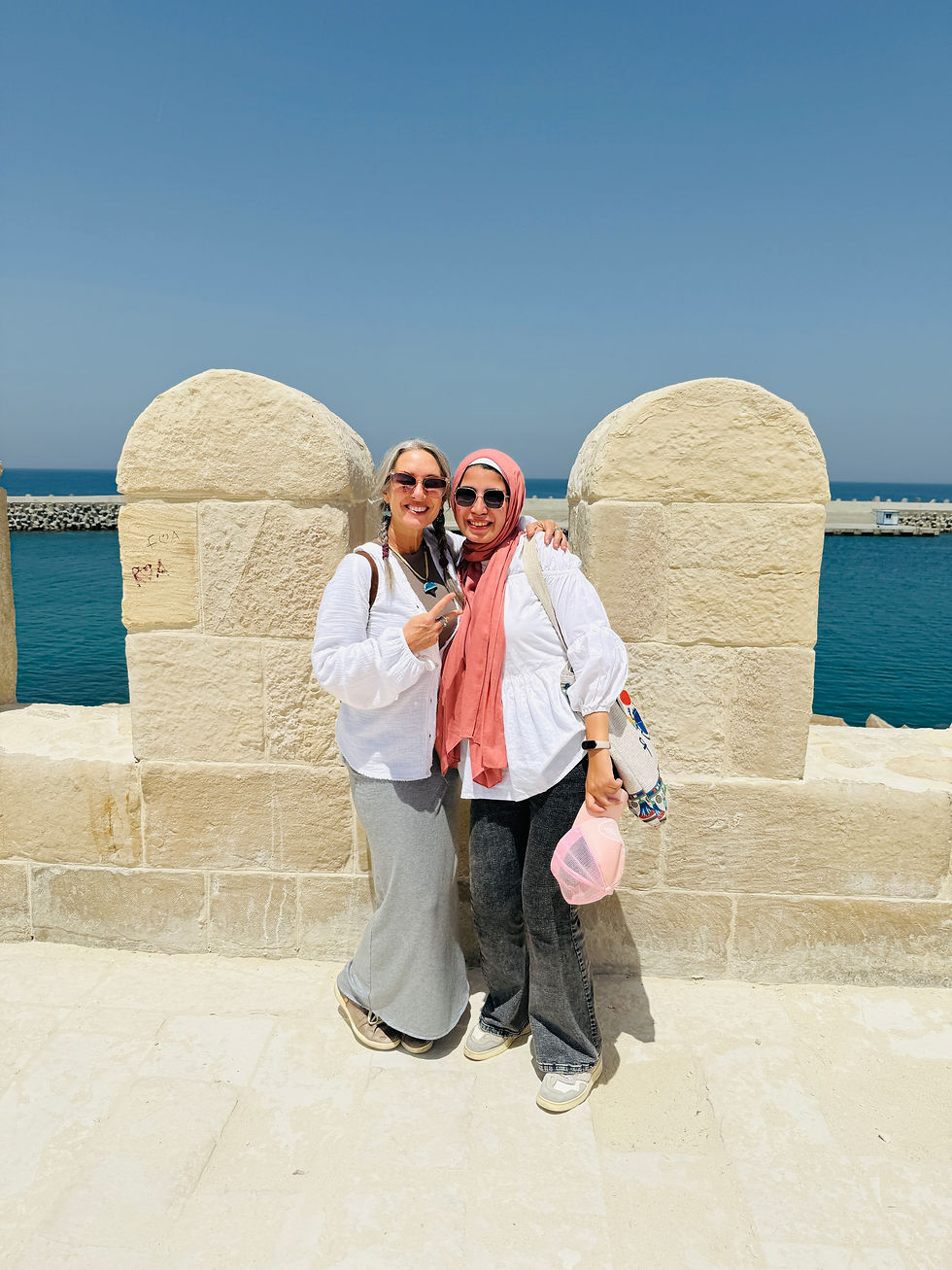
We learned its language before we were old enough to evaluate its theology. We absorbed ideas about God, morality, truth, outsiders, and other religions from parents, clergy, teachers, communities, and culture.
That is not inherently good or bad. It is simply how human beings are socialized.
But it raises an uncomfortable question:
How much of what we believe about our own faith, and especially someone else's, have we actually investigated for ourselves?
That question feels particularly urgent in the United States right now.
Across social media, political campaigns, protests, churches, mosques, and city council meetings, Islam is increasingly becoming the subject of heated public debate. Some of the rhetoric coming from self-identified Christian activists has moved well beyond theological disagreement into sweeping claims about Muslims as people.
At the same time, something very different is happening.
Christians are standing beside Muslims against anti-Muslim hostility. Muslims are opening their doors to Christians. Interfaith organizations are deliberately creating opportunities for people to encounter one another. And some Christians who were taught frightening things about Islam are deciding to investigate those claims for themselves.
These are two very different responses to the same thing:
difference.
And somewhere between them lies a conversation America desperately needs.
We Inherit More Than Religion
The claim that "99% of people are assigned their religion at birth" does not hold up to current U.S. data.
But the actual number is still striking.
According to Pew Research Center's 2023-24 Religious Landscape Study, 86% of American adults were raised in a religion. Eighty percent were raised Christian, while 6% were raised in non-Christian religions. Only 13% were raised without a religious affiliation.
Religion was not merely a box checked on childhood paperwork. Sixty-eight percent of American adults say they attended religious services at least monthly as children, including 56% who attended at least weekly. Seven in ten received some form of formal religious education.
In other words, for most Americans, religion was introduced during childhood, surrounded by trusted adults and reinforced through family and community.
Long before we could meaningfully compare Christianity with Islam, Judaism, Hinduism, Buddhism, atheism, or anything else, many of us already had a framework through which those traditions would eventually be interpreted.
That does not invalidate an inherited faith.
But inherited certainty and examined conviction are not necessarily the same thing.
Then We Grow Up
And something interesting happens.
We encounter more of the world.
Pew found that 35% of American adults now identify differently from the religion in which they were raised. About 56% still identify with their childhood religion, while another 9% were raised without religion and remain unaffiliated.
Some change religions.
Some leave religion entirely.
Some investigate their childhood faith and become even more committed to it.
Among Americans who were raised religiously, those who eventually leave most commonly say they stopped believing the religion's teachings, that religion became unimportant to their lives, or that they gradually drifted away. Among those who switch into another religion, nearly half say feeling called toward another faith was highly important.
And most switching happens relatively young: 85% of people who have changed religious identities say they did so by age 30.
Islam is actually among the more "sticky" religious identities in America. About 77% of Americans raised Muslim remain Muslim, compared with 82% of those raised Hindu, 76% of those raised Jewish, 70% raised Protestant, and 57% raised Catholic.
Meanwhile, the movement away from Christianity is substantial. Pew estimates that 21.9% of all American adults are former Christians, compared with 3.6% who became Christians after being raised another way. And 20.2% of American adults were raised with a religion but now identify as atheist, agnostic, or nothing in particular.
These numbers do not tell us which religion is true.
They tell us something else:
Exposure, experience, investigation, relationships, and adulthood can complicate what once seemed settled.
What Happens When the "Other" Becomes a Person?
This is where the conversation about Christianity and Islam becomes much more interesting than a theological argument.
Someone can spend years hearing:
Muslims believe this.
Islam teaches that.
Christians are like this.
The Bible says that.
The Qur'an says this.
And never actually sit down with the person being described.
Never read their scripture.
Never attend their house of worship.
Never ask them what they believe.
Never share dinner.
Never become friends.
Distance is extraordinarily efficient at preserving stereotypes.
Proximity is considerably more troublesome.
Because suddenly "Muslims" become Mahmoud, Fatima, Ahmed, Abeer, Omar, or the family sitting beside you at dinner.
"Christians" become something more complicated than televangelists, politicians, protesters, or the worst Christian someone encountered during childhood.
People become individuals again.
This is central to Cultural Stewardship™.
Cultural Stewardship™ does not ask anyone to abandon Christianity, Islam, or any other deeply held conviction.
It asks something both simpler and harder:
Do I understand this person well enough to make the claims I am making about them?
Something Is Happening in the Current Climate
There is evidence that anti-Muslim hostility has increased.
The Council on American-Islamic Relations, a Muslim civil-rights advocacy organization, reported receiving 8,683 complaints in 2025, the largest annual number since it began publishing its reports covering 1996. Texas was among five states where complaints increased for three consecutive years. CAIR also reported a resurgence of rhetoric portraying Islamic religious principles themselves as inherently threatening or anti-American.
CAIR complaint data should not be confused with FBI hate-crime statistics. They measure different things. But the trend deserves attention.
So does the political environment.
Reuters reported on September 8 that Muslims and Islam are increasingly becoming campaign issues ahead of the 2026 midterms, including attacks surrounding Muslim political candidates and controversies over Muslim institutions and developments.
That doesn't mean "Christians hate Muslims."
Such a conclusion would commit exactly the categorical error Cultural Stewardship™ is intended to challenge.
Millions of American Christians reject anti-Muslim hatred. Many are actively confronting it.
And Dearborn, Michigan, recently gave us a remarkable illustration of both realities.
Dearborn: Two Versions of Christianity
In August, anti-Muslim activist Jake Lang brought what he called a "Christian Crusade" to Dearborn, home to one of America's largest Arab-American communities.
Participants included armed demonstrators. Lang told the city council that Muslims were seeking to destroy Americans, made sweeping accusations against Muslims, and declared that their time in the United States was "running short."
Those statements deserve to be identified for what they are: not merely disagreement with Islamic theology, but categorical hostility toward Muslim people.
Yet before the demonstration even occurred, Christian leaders in Dearborn stood publicly with their Muslim neighbors.
Pastor Nathan Hayes of Solid Rock Church said the agitators were attempting to create division where he did not believe it existed. Chaplain Rick Neveu of St. Kateri Church described people of different faiths living peacefully together in Dearborn.
Then, days after the confrontation, something else happened.
Christ Episcopal Church hosted Hate Has No Home in Michigan.
Christians, Muslims, Jews, and other community leaders gathered inside a Christian church in solidarity. The church described itself as a place where people from different cultures, languages, and religious traditions come together and serve their community.
Same city.
Same religions.
Same moment in history.
Completely different response.
One group arrived to confront.
Another pulled up chairs.
North Texas Is Having This Conversation Too
This isn't confined to Michigan.
It is happening here in North Texas.
The proposed Muslim-centered development formerly associated with the East Plano Islamic Center and now called The Meadow has become the subject of multiple government investigations and intense political rhetoric.
There are legitimate legal questions concerning housing and development that deserve ordinary regulatory scrutiny. HUD is currently investigating potential discrimination involving the development. The Justice Department previously closed its own probe after developers agreed to comply with federal fair-housing requirements.
Those facts should be examined as facts.
They should not automatically become evidence that Muslims collectively pose a threat.
McKinney recently experienced another version of the debate.
More than 100 people spoke during more than five and a half hours of public comment concerning plans for a mosque. The City Council ultimately approved the site plan unanimously, explaining that its decision concerned whether the project complied with city ordinances.
Richardson provides yet another model.
The Richardson Interfaith Alliance includes roughly 40 participating groups, extending beyond religious organizations to community institutions. Its work has included visits between religious communities, cultural education, community service, and opportunities for young people to encounter traditions other than their own.
That may seem mundane compared with angry demonstrations.
It isn't.
It is what relationship-building looks like before a crisis.
Curiosity Is Not Conversion
There is another response emerging that deserves attention.
Some Christians are hearing claims about Islam and saying:
I want to investigate this myself.
That may mean reading the Qur'an rather than relying solely upon quotations selected by someone hostile toward Islam.
It may mean asking a Muslim why they believe something.
It may mean visiting a mosque.
It may mean studying Islamic history alongside Christian history.
It may mean talking with former Muslims, Muslim converts, Islamic scholars, secular Muslims, devout Muslims, and Christians who have seriously studied Islam.
And after doing all of that, someone may remain completely Christian.
Curiosity does not require conversion.
Nor does respect require theological agreement.
A Christian can believe Christianity is true and still refuse to misrepresent Islam.
A Muslim can believe Islam is true and still treat Christianity fairly.
An atheist can reject both religions while protecting the dignity and religious freedom of those who practice them.
That is not relativism.
It is intellectual integrity.
The Question Isn't Whether You Inherited Your Faith
Most of us inherited something.
Religion.
Politics.
National identity.
Historical narratives.
Ideas about race.
Ideas about gender.
Ideas about foreigners.
Ideas about who is dangerous and who belongs.
The deeper question is:
What have you done with what you inherited?
Have you examined it?
Have you challenged it?
Have you exposed it to people who disagree?
Have you read outside your own ideological ecosystem?
Have you ever asked someone from the group you fear whether what you've heard about them is actually true?
And perhaps most uncomfortable:
What evidence would you accept that could prove one of your assumptions wrong?
If the answer is nothing, we are no longer investigating.
We are protecting an identity.
This Is Where Cultural Stewardship™ Begins
Cultural Stewardship™ does not ask us to become neutral human beings without convictions.
It asks us to steward those convictions responsibly when they encounter another human being.
It means recognizing that our words shape perceptions of entire communities.
It means distinguishing extremists from populations.
It means refusing to hold an ordinary Muslim responsible for terrorism any more than we would hold an ordinary Christian responsible for violence committed by someone invoking Christianity.
It means asking questions before making accusations.
It means reading before repeating.
It means listening without preparing a defense.
And sometimes it means sitting with the uncomfortable possibility:
Maybe what I was taught was incomplete.
That sentence does not destroy faith.
It can deepen it.
Global Security Begins Much Closer to Home
Religious hostility is not merely a theological problem.
It can become a security problem.
When populations are repeatedly portrayed as dangerous, foreign, subhuman, conspiratorial, or incompatible with society, social trust deteriorates.
Polarization increases.
Communities retreat into defensive identities.
Political actors can exploit fear.
Extremists on all sides gain easier recruiting material.
And ordinary neighbors begin viewing one another as threats.
The opposite process matters too.
Interfaith relationships create communication channels.
Community relationships create resilience.
Personal relationships complicate propaganda.
Relational trust makes it harder to convince someone that an entire population is the enemy.
That does not solve every conflict.
But it changes the environment in which conflict grows.
And that matters for peace, stability, and security.
Maybe We Need More Tables
The answer to Christian-Muslim tension will not be pretending theological differences don't exist.
They do.
Some are profound.
Nor should Christians stop asking difficult questions about Islam, or Muslims stop asking difficult questions about Christianity.
Ask them.
But ask the people who actually know the tradition.
Read the texts.
Study the history.
Invite competing perspectives.
Challenge propaganda regardless of which side produces it.
And then do something surprisingly radical:
Meet each other.
Have coffee.
Visit the church.
Visit the mosque.
Invite the neighbor.
Share dinner.
Ask the uncomfortable question respectfully.
Listen to the answer.
Stay curious.
Because perhaps the most dangerous religious certainty is not believing deeply.
It is believing we completely understand people we have never bothered to know.
We may never agree about God.
We do not need to. (Sit there a minute.)
But we can decide what kind of neighbors we will be while searching for Truth.
And perhaps that is where peace actually begins.
Not when everyone believes the same thing.
But when difference no longer requires fear.
Fear Rarely Survives a Table.
We Travel the World Unfiltered. Where Strangers Become Tribe & Global Peace Begins at Kitchen Tables.
Community Round Table Questions
How much of what you believe about another religion comes from your own investigation, and how much was inherited from family, religious leaders, media, or community?
Can we strongly believe our own faith is true while remaining genuinely curious about another person's faith? Where is the line between conviction and intolerance?
Have you ever personally known someone from a religion or community you were taught to distrust? Did knowing them change any of your assumptions?
When criticism of a religion shifts into broad claims about the people who practice it, how should members of that same faith community respond, especially when the rhetoric is coming from their own side?
What would healthier Christian-Muslim relations in America actually look like if the goal were not agreement or conversion, but understanding, dignity, and peaceful coexistence?
References
Pew Research Center. Religious Upbringing and Childhood Education, February 26, 2025.
Pew Research Center. Religious Switching, February 26, 2025.
Pew Research Center. Why Do Some Americans Leave Their Religion While Others Stay?, December 15, 2025.
Council on American-Islamic Relations. The Right to Be Different: 2026 Civil Rights Report.
Reuters. Republicans Are Making Muslims a Campaign Issue in the 2026 US Midterms, September 8, 2026.
Michigan Public. Dearborn Leaders Say City Remains Safe for All Faiths Ahead of Visit by Anti-Muslim Provocateur, August 18, 2026.
Michigan Public. “Christian Crusader” Rally Meets Resistance in Dearborn, August 19, 2026.
Episcopal News Service. Michigan Church Hosts Interfaith Rally Supporting Muslim Neighbors as Hate Groups Target Dearborn, August 26, 2026.
The Texas Tribune. Feds Launch Fair Housing Probe into North Texas Development Marketed to Muslims, February 13, 2026.
CBS News Texas. McKinney City Council Greenlights Mosque Site Plan Amid Both Support, Derision from Community Members, August 6, 2026.
City of Richardson. Community Inclusion and Engagement Commission, May 21, 2026.


Comments