
Guides of the Ground: Faith Afolabi

Nigeria — Where Identity, Respect, and Resilience Shape Everyday Life

Cultural steward, educator, and Global Partner helping bridge local identity with global understanding.
There are places in the world that move quickly.
And then there are places where, even within that movement, something deeper holds everything together.
In Nigeria, that foundation is not found in infrastructure or pace.
It is found in identity. In respect. In the quiet, consistent ways people acknowledge one another.
This is where Faith Afolabi lives and works, between the fast-moving energy of Lagos and the rooted traditions of Ogun State.
Between Movement and Memory
Faith’s life exists between two rhythms.
Lagos moves with urgency. It is global, connected, constantly evolving.
Her hometown in Ogun State moves differently. It is grounded in community, shaped by lineage, and guided by tradition.
Together, these spaces form a dual perspective.
Culture is not static. But it is not rootless either.
Nigeria itself reflects this complexity, home to over 500 ethnic groups, each carrying its own traditions, systems, and expressions of identity .
Faith speaks from within the Yoruba cultural experience, one defined by structure, respect, and deep social awareness.
The Language of Respect
In Yoruba culture, respect is not implied.
It is practiced.
It is heard in the way people greet one another:
E kaaro — Good morning
E kaasan — Good afternoon
E kaale — Good evening
E ku joko — Greeting someone who is seated
These are not just words.
They are acknowledgments.
They signal presence, awareness, and an understanding of one’s place in relation to others .
In a world that often rushes past interaction, this level of intentionality can feel unfamiliar.
But here, it is foundational.
What Outsiders Often Miss
Many international visitors arrive with assumptions.
That life is unstructured. That systems are informal. That complexity is absent.
But the reality is something else entirely.
There are deeply embedded cultural systems guiding behavior, communication, and social hierarchy.
Structure exists.
It simply does not always mirror Western frameworks.
Without understanding that difference, it is easy to misinterpret what is being experienced.
Cultural Stewardship as Responsibility
For Faith, cultural stewardship is not symbolic.
It is active.
It is the responsibility to represent her culture with honesty while helping others understand it in a global context.
Her background in History and Diplomatic Studies allows her to connect local lived experience with global interpretation.
Because culture is not just something to preserve.
It is something to translate.
Beyond Sightseeing
Understanding Nigeria is not about landmarks.
It is about interaction.
A Sacred Earth Journey immersion here would center on participation:
conversations within community
shared meals
daily rituals
cultural festivals
Moments like the Ojude Oba Festival, where heritage, unity, and respect for traditional authority come to life through celebration.
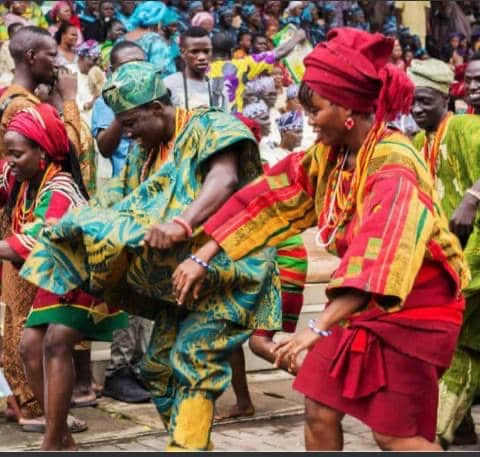
Or the experience of traditional dress: Agbada, Buba, Iro, Sokoto, and Gele.
Each piece carries meaning, identity, and pride.

And then there is food, deeply regional and deeply personal: Ikokore, Ebiripo, Jojo
These are not simply meals. They are expressions of place.

The Unglamorous Truth of Cultural Exchange
Cultural exchange is often romanticized.
The reality requires something more difficult.
Patience.Humility.The willingness to unlearn.
Misunderstandings will happen.
Faith has experienced this firsthand, particularly in communication.
Yoruba communication emphasizes respect and can be indirect.
Western communication tends to be more direct.
Without context, this difference can lead to misinterpretation, even being perceived as rude when the intention is respect.
Teaching Identity Before Interpretation
As a secondary school teacher, Faith works with students at a formative stage of identity.
Her focus is not just academic.
It is foundational.
She teaches where they come from, what their culture represents, and why it matters.
Understanding one’s origin builds confidence, self-worth, and clarity in a global environment.
Nigeria’s education system has increasingly integrated cultural awareness through subjects like history, citizenship, and heritage studies, reinforcing the importance of identity in shaping future generations.
Redefining the Narrative
Globally, Nigeria is often defined by its challenges.
But this is only part of the story.
Faith points to something deeper.
Resilience. Creativity. Cultural richness.
These are central to the nation’s identity.
Where Understanding Begins
Cultural intelligence, as Faith defines it, is the ability to understand, adapt to, and respectfully engage with people from different cultural backgrounds.
It is not about memorizing customs.
It is about learning how to interpret people accurately.
Where Sacred Earth Journey Meets Nigeria
We Travel the World Unfiltered.
Where Strangers Become Tribe.
Where Global Peace Begins at Kitchen Tables.
In Nigeria, those kitchen tables are not symbolic.
They are where identity is reinforced, where stories are shared, and where respect is practiced daily.
Round Table Reflection
What assumptions do I carry about places I have never experienced?
How do I interpret behavior that is unfamiliar to me?
Where might I be misreading respect as something else?
What would change if I approached cultural differences with patience instead of certainty?
Closing
Some cultures reveal themselves slowly, through language, rhythm, and everyday interaction.
Nigeria is not a place you understand quickly.
It is a place you learn through presence.
And if you are willing to engage with it fully, you will not just see it differently.
You will begin to understand it.
Journals published by SEJ to help you on your way to Cultural Stewardship




Comments