
What We Know, What We Don’t: The Death of Mohommad Nazeer Paktyawal and the Discipline of Slowing Down
- Anna Saladino

- Mar 16
- 8 min read
Updated: Mar 17
As conflicting reports flood in about Mr. Paktyawal's service please know we are also looking into this through our networks and channels. Again, we must always pause before making knee-jerk reactions. Please know it is possible that perhaps He served in the Afghan military and not the US. It's possible that he served as a contractor. Let's be patient and pause until these things can be confirmed. Let's not hastily spread convictions prior to them being confirmed or handed down after investigation. Making remarks about someone as a criminal prior to completed investigations is not only unprofessional and harmful, but it goes against the very fabric of our country. Due process.
News travels quickly. Understanding takes longer.
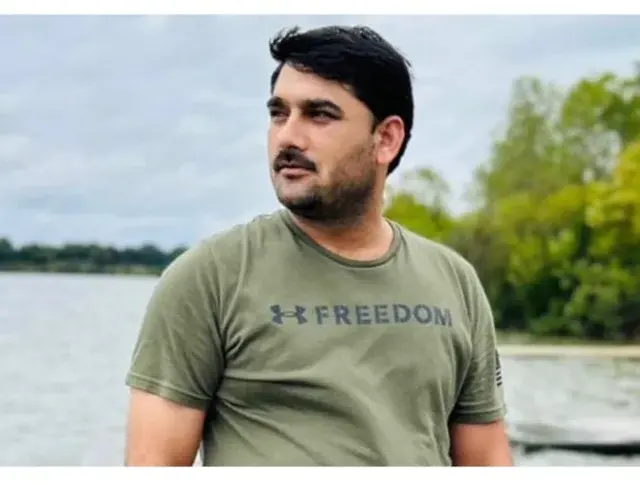
In the days following the death of Mohommad Nazeer Paktyawal in federal custody, headlines, commentary, and speculation spread rapidly across social media and news feeds. Some narratives cast him as a criminal who received what he deserved. Others immediately portrayed him as a heroic ally wronged by the system. Both reactions reflect a familiar modern impulse: deciding the meaning of a story before the facts are fully known.
Responsible analysis requires a slower approach. It begins by separating verified information from assumptions and acknowledging what remains unresolved.
The Known Facts
As of mid-March 2026, credible reporting from Reuters, the Texas Tribune, and KERA provides the most reliable public record available.
Mohommad Nazeer Paktyawal was a 41-year-old Afghan father of six living in Richardson, Texas. Multiple outlets reported that he had previously served in Afghan special forces and had worked alongside U.S. Army Special Forces beginning around 2005 (Roulette 2026; Serrano and Nguyen 2026). After the fall of Kabul in August 2021, Paktyawal and his family were evacuated to the United States and entered under humanitarian parole.

He later applied for asylum and was awaiting the outcome of that case.
On the morning of March 13, 2026, federal immigration agents detained Paktyawal outside his Richardson home while he was reportedly preparing to take his children to school. ICE described the arrest as a targeted enforcement action (Serrano and Nguyen 2026).
Later that same day, ICE reported that Paktyawal complained of shortness of breath and chest pain while being held in a processing room at the agency’s Dallas field office. He was transported to Parkland Hospital, where physicians reportedly recommended that he remain under observation.
The following morning, March 14, hospital staff observed swelling of his tongue while he was eating breakfast. A medical emergency followed, and Paktyawal was pronounced dead at 9:10 a.m. (Serrano and Nguyen 2026). At the time of reporting, the official cause of death had not yet been publicly established.
In considering the timeline of events, some readers may notice that Paktyawal was reportedly eating breakfast on the morning of March 14, which fell during the Islamic holy month of Ramadan. During Ramadan, observant Muslims fast from dawn until sunset. However, Islamic law provides clear exemptions for those who are ill or receiving medical treatment. Individuals who are sick, hospitalized, or advised by physicians to eat or take medication are permitted to break the fast and may make up missed days later. In hospital settings, meals may also be served according to medical schedules rather than religious observance, meaning the use of the term “breakfast” in medical reporting does not necessarily indicate whether or not a patient was observing the fast at that moment.
Allegations and the Limits of the Public Record
ICE also reported that Paktyawal had previously been arrested in Dallas County in September 2025 for alleged SNAP fraud and again in November 2025 for theft. However, reporting from the Texas Tribune notes that federal authorities did not say whether those arrests resulted in convictions, and publicly available coverage did not confirm that any conviction had occurred (Serrano and Nguyen 2026).
Equally important, none of the major outlets covering the case reported any connection between Paktyawal and terrorism or national-security allegations (Roulette 2026; Serrano and Nguyen 2026).
These distinctions matter. Public conversations often blur the line between accusation and adjudication. Yet in a functioning legal system those are not the same thing.
An arrest signals that authorities believe a law may have been broken. A conviction occurs only after that claim has been tested through legal process and evidence.
The Cultural Context Question
Cases involving migrants and refugees sometimes raise another important question: how well did individuals understand the legal and administrative systems they were navigating?
The American legal and bureaucratic environment is famously complicated. Refugee resettlement programs attempt to orient newcomers to U.S. laws and procedures, but scholars consistently note that navigating these systems remains challenging even for highly educated migrants with strong support networks (Fee 2019; Abood et al. 2021).
Language barriers, unfamiliar institutions, and limited access to legal guidance can complicate even routine matters such as public benefits, licensing requirements, or regulatory compliance.
It is worth acknowledging something that most Americans quietly understand: the U.S. legal and administrative system can be bewildering even for people born here.
Consider the simple act of visiting the Department of Motor Vehicles. Few Americans expect a single trip to the DMV to resolve anything. One visit produces a form, the next requires a different document, and the third involves standing in a line that seems to exist outside normal concepts of time. Somewhere in the process a clerk will inevitably inform you that the correct form was the other form, the one you were told not to bring.
The point is not that laws should be ignored. It is that navigating them often requires experience, guidance, and patience. Even attorneys debate the interpretation of statutes, regulations, and administrative rules. For individuals arriving from entirely different legal traditions, the learning curve can be steep.
Research on refugee resettlement consistently shows that access to clear information, legal orientation, and community mentorship significantly affects integration outcomes (Abood et al. 2021; Pilato et al. 2023).
Why Support Systems Matter
Studies of refugee settlement repeatedly emphasize that social support networks play a crucial role in helping newcomers navigate institutions, understand regulations, and build stable lives in their host countries (Wachter et al. 2022).
Mentorship, community guidance, and culturally informed legal education often determine whether a family successfully adjusts to a new legal environment.
Without those supports, misunderstandings can occur. What appears to authorities as intentional misconduct may, in some cases, reflect confusion, misinformation, or incomplete orientation. Determining which explanation applies requires careful investigation rather than immediate assumption.
At this stage, the public record in Paktyawal’s case does not establish which factors may have been present. That question remains open.
Another question worth asking, particularly within the Richardson community where Paktyawal lived, is what support systems were in place to help newly arrived Afghan families navigate American laws, public benefits, and bureaucratic systems. Resettlement agencies, community organizations, and informal mentorship networks often play a critical role in helping newcomers understand the expectations of a legal environment that can be complex even for those born here. Understanding what guidance was available, and what may have been missing, could provide important context for evaluating the broader circumstances surrounding this case.
The Discipline of Slowing Down
For readers of the Sacred Earth Journey Journal, cases like this illustrate a broader lesson about cultural stewardship and responsible judgment.
Sacred Earth Journey encourages travelers and observers alike to approach unfamiliar situations with curiosity rather than immediate certainty. The ethos behind phrases such as Travel the World Unfiltered, Where Strangers Become Tribe, and Global Peace Begins at Kitchen Tables is not sentimental. It reflects a discipline of listening carefully, gathering evidence, and resisting the urge to reduce complex human stories to quick labels.
Paktyawal’s death raises serious questions that deserve investigation. What medical care did he receive while in custody? What does the full legal record show regarding the allegations against him? What support structures were available to help his family navigate American legal systems?
Those questions require evidence, not speculation.
And they remind us of a simple principle worth repeating.
An arrest is not a conviction, an allegation is not a complete record, and a headline is never a substitute for patient, objective fact-finding.
The Responsibility of Careful Judgment
The death of any person in custody demands scrutiny. It also demands intellectual honesty.
Before we declare heroes or villains, before we assign blame or absolution, we must first establish the facts.
That process may take time. It may complicate narratives that feel emotionally satisfying. Yet it is precisely this patience that allows societies to approach difficult cases with fairness rather than impulse.
In an era shaped by rapid headlines and algorithm-driven outrage, slowing down may be the most responsible act of all.
Community Round Table Questions
Complex stories like this one rarely offer easy answers. They often ask something more difficult of us: the willingness to pause, listen carefully, and seek understanding before forming conclusions.
Around kitchen tables, in community centers, and among families and friends, these conversations can help strengthen the very social fabric that allows diverse communities to live together with trust and dignity.
Consider exploring these questions together.
Questions for Families and Communities
What responsibility do we have to seek reliable information before forming opinions about events like this?
How can communities balance the need for law enforcement with the responsibility to ensure fairness and due process?
What kinds of support systems help newly arrived immigrants and refugees understand the complexities of American laws and institutions?
In what ways might cultural misunderstandings contribute to conflict or legal trouble when people first arrive in a new country?
How can communities help newcomers navigate systems that even many Americans find confusing?
What role should mentorship, local organizations, or faith communities play in helping migrant families acclimate?
How do we maintain compassion for individuals and families involved in difficult situations while still allowing investigations to uncover the truth?
What does responsible judgment look like in an age of rapid headlines and social media reactions?
How can communities encourage more thoughtful dialogue rather than polarization when emotionally charged stories emerge?
Continuing the Conversation
These conversations are exactly why the Sacred Earth Journey Round Table exists.
Our goal is to create a space where leaders, thinkers, and everyday citizens can gather in thoughtful dialogue, exploring complex issues with curiosity, humility, and respect.
Because meaningful understanding rarely begins with certainty. It begins with listening.
Explore more conversations like this at the Sacred Earth Journey Round Table, where difficult topics are approached with curiosity, humility, and respect.


Comments